
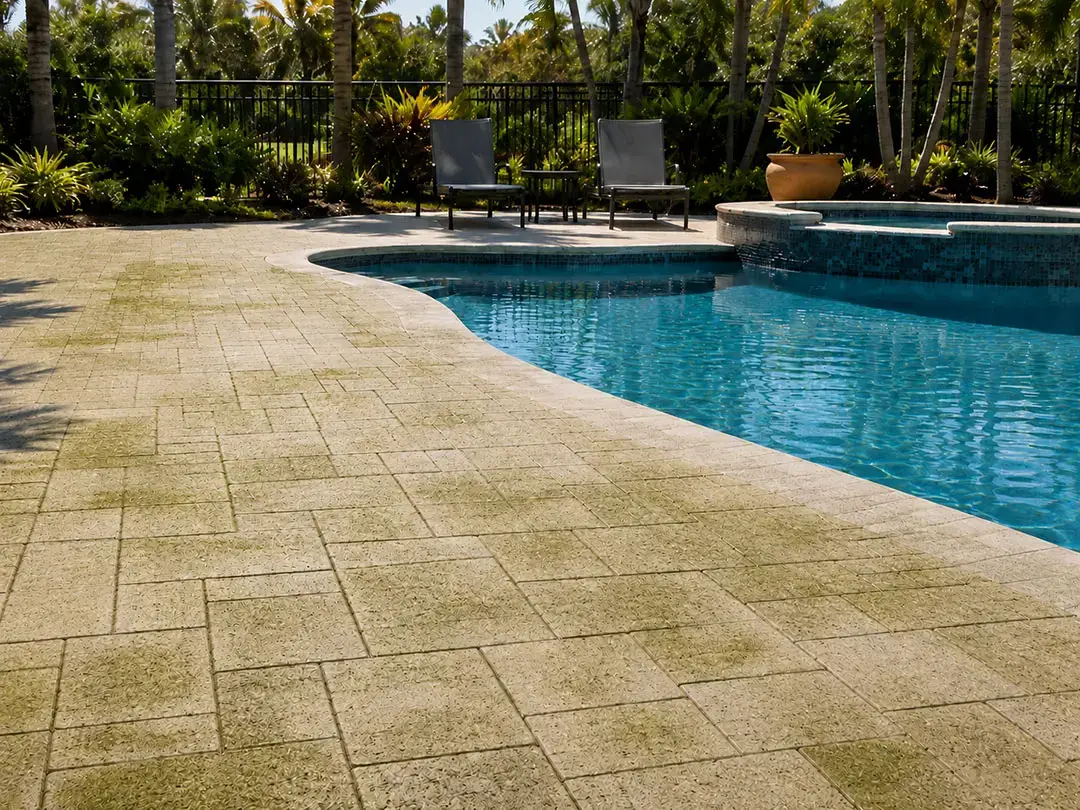
Summer means longer days, more outdoor gatherings, and more use of patios, driveways, and pool areas. It also creates ideal conditions for algae to grow on exterior surfaces. Many property owners find that concrete, pavers, sidewalks, and pool decks develop a green discoloration during the warmer months. It may initially appear to be a cosmetic issue, but algae can create a slick surface and gradually affect a property’s appearance.
Property owners can easily remove algae buildup by hiring a professional power wash service that can also restore exterior surfaces. Knowing what causes algae to grow in the summer can help property owners keep outdoor spaces cleaner and safer throughout the season.
The Connection Between Heat, Humidity, and Algae Growth
Algae grow in places where moisture and warmth are always available. “The summer weather creates a combination of high temperatures and higher humidity that lets the algae spores grow quickly. Even if a surface appears dry, humidity in the air can supply enough moisture to support growth.
Driveways, sidewalks, and pool decks often get water from rain, irrigation systems, and swimming pools. These conditions provide algae with a surface to attach to and gradually spread. Partially shaded areas are especially at risk because they stay wet longer than areas exposed to direct sunlight.
Why Concrete and Pavers Attract Algae
Concrete and paver surfaces have tiny pores that can trap water. The water fills these pores, providing a place for algae to settle and grow. When it starts to grow, the surface may appear green or dark, especially after rainstorms.
Pool decks are particularly susceptible to damage due to the constant exposure to water and foot traffic. With water splashing out of swimming pools and humid weather, the conditions are perfect for algae to grow. Driveways can also accumulate dirt, pollen, and organic debris that offer additional nutrients for growth.
If the algae is not cleaned regularly, it can spread to more areas of the property.
Safety Concerns Associated with Algae Buildup
Many homeowners only worry about the appearance of algae stains, but safety should be a concern as well. Wet surfaces are often slippery due to algae. These conditions can increase the risk of slips and falls around pools, walkways, patios, and entryways.
Families spend more time outdoors during the summer months, so clean walking surfaces are even more important. Children running on a pool deck or guests at outdoor gatherings may face dangerous conditions if algae accumulations remain unaddressed.
Professional cleaning can remove these contaminants and help restore traction on affected surfaces.
Why DIY Cleaning Often Falls Short
Property owners often try to remove algae with garden hoses, household cleaners, or rented equipment. These methods can occasionally remove surface stains but frequently leave algae in porous materials.
Sometimes wrong cleaning techniques can damage concrete, pavers, or decorative surfaces. Excessive pressure may leave marks or cause premature wear. Household cleaners may work, but only for a short time. Algae roots are often below the surface.
Professional power washing companies have specialized equipment and cleaning solutions designed to more thoroughly remove algae while protecting the underlying material.
Preventing Algae from Returning
Summer weather is a natural time for algae to grow, but a few maintenance practices can help reduce buildup in the future. Keeping outdoor areas clean of leaves, dirt, and debris limits the organic material algae use as a food source. Good drainage also helps prevent standing water from collecting on driveways and pool decks.
Regularly cleaning your home’s exterior can help eliminate algae early on. Summer is a common time for many property owners to plan regular cleaning to keep their outdoor spaces looking good and safe. Regular maintenance can help you with any future cleaning efforts.
Frequently Asked Questions
How often should a driveway be professionally cleaned?
Most driveways benefit from professional cleaning once or twice per year. Properties with heavy shade, frequent rainfall, or significant algae growth may require more frequent service.
Can algae damage concrete surfaces?
Algae primarily affect appearance and safety, but prolonged moisture retention can contribute to surface deterioration. Regular cleaning helps preserve the condition of concrete and pavers.
Is power washing safe for pool decks?
Yes. Professional technicians adjust cleaning methods based on the surface material to remove algae and dirt without causing unnecessary damage.
What causes green stains to return after cleaning?
Algae spores are naturally present in the environment. Moisture, humidity, shade, and organic debris can encourage new growth if surfaces are not maintained regularly.
Keep Exterior Surfaces Cleaner Throughout the Summer
Green algae growth is a common issue in warm, humid weather, particularly on driveways, sidewalks, patios, and pool decks. Professional power washing removes stubborn buildup, improves safety, and helps maintain curb appeal throughout the season. If you are looking for professional power wash services in Tampa, FL, contact our team to learn more about restoring your exterior surfaces.
Picture Source: AI-generated