
If you live here in Tampa, FL, you have probably noticed those ugly black streaks creeping across roofs all over the neighborhood. Homeowners ask us all the time about soft washing vs pressure washing roof cleaning, and which one is really safe for their shingles or tile. It’s a great question, and the answer matters more than most folks think. Our warm, humid subtropical weather keeps algae, mold, and mildew growing pretty much year-round, so your roof takes a beating from heat, frequent rain, and salty coastal air. At Pink Flamingo Power Wash, we’ve cleaned countless Tampa roofs, and we’ve learned that soft washing is usually the safer, longer-lasting choice for most roofing materials in our area.
Below, we break down how each method works, why your roof needs special care, and how to pick the right cleaning solution for your home. Our goal is to give you honest, helpful advice so you can protect one of the biggest investments on your property.
Understanding the Difference Between Soft Washing and Pressure Washing
Both methods clean outdoor surfaces, but they go about it in very different ways. Understanding that difference is the first step in the whole soft washing vs pressure washing roof cleaning debate. One relies on force, and the other relies on the right cleaning solution doing the heavy lifting.
How Pressure Washing Works
Pressure washing uses high-pressure water to blast away dirt, grime, and surface build-up. That strong stream of water is great for hard, tough surfaces. Think concrete driveways, sidewalks, and some commercial jobs where the material can withstand high loads. The pressure does the cleaning, and it works fast on the right surface.
How Soft Washing Works
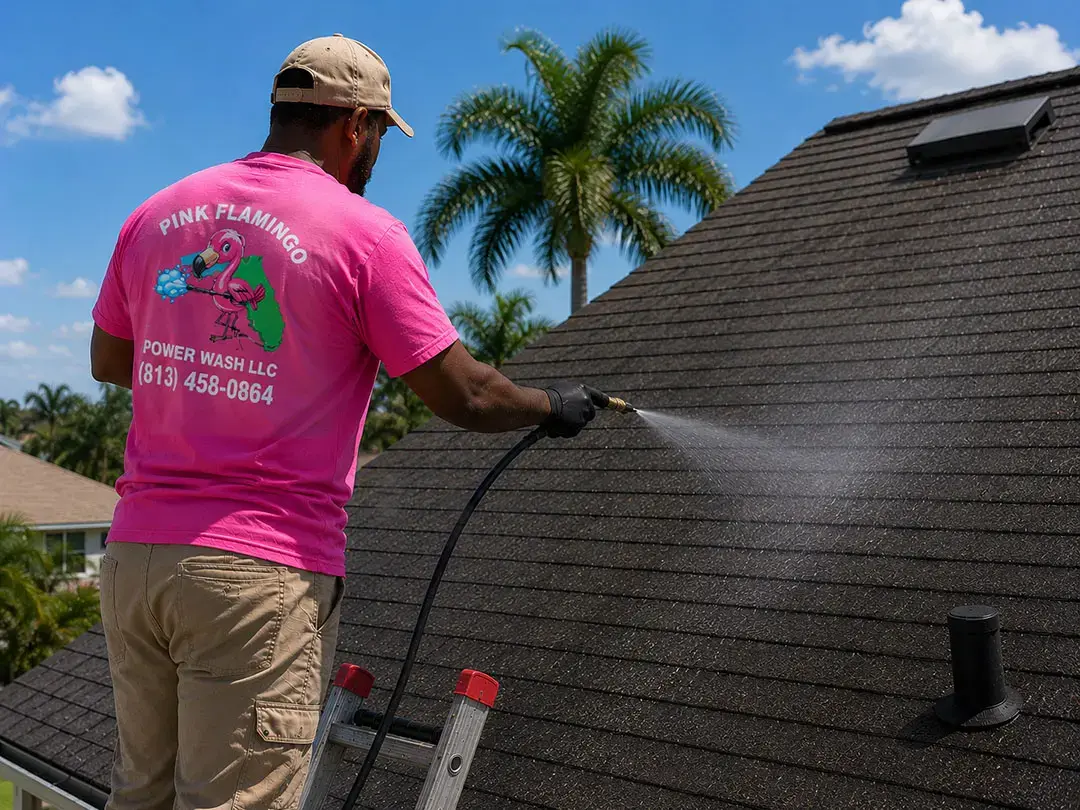
Soft washing uses low-pressure water combined with specialized cleaning solutions that break down algae, mold, mildew, bacteria, and other organic growth right at the source. The cleaning agents do most of the work instead of using force. After the solution does its job, we rinse the surface with gentle, low-pressure water. This keeps roofing materials safe while still getting them nice and clean.
Why Roofs Require a Different Cleaning Approach
Roofs are not built to take the same beating as concrete or masonry. High water pressure can damage the protective layers of your roofing system, whether you have tile roofs or asphalt shingles. What works great on a driveway can quietly wreck a roof.
The Risk of Stripping Granules from Asphalt Shingles
A lot of homeowners are surprised to learn that high-pressure washing can strip the tiny granules off asphalt shingles. Those granules aren’t just for looks. They shield your roof from harsh UV rays and Florida’s constant weather wear. Once they wash away, the shingle underneath is exposed, and the roof can wear out much faster than it should. We’ve seen roofs age years in just a few seasons after aggressive pressure washing.
Damage to Tile, Flashing, and Sealants
It’s not just shingles that are at risk. Too much pressure can crack tile, loosen flashing, and break down the sealants that keep water out of your home. Once water gets in, you’re looking at leaks and repairs that cost way more than a cleaning. Soft washing is how we clean roofing surfaces without applying all that unnecessary force. The process serves as a natural deterrent to biological growth while keeping the roofing material intact.
The Benefits of Soft Washing for Roof Cleaning
Once folks understand the risks of too much pressure, the benefits of soft washing start to make a lot of sense. Here in Tampa, those benefits show up quickly because our climate is so hard on roofs.
Longer-Lasting Results by Killing Algae at the Source
One big benefit of soft washing is that the results tend to last a lot longer. Algae, mold, and mildew are all living things. Pressure washing removes the visible staining, but it often leaves microscopic spores behind. When those spores stay put, the growth comes back fast in our humid weather. Soft washing tackles the problem by removing the organic build-up that causes the discoloration in the first place. That means a cleaner roof that stays clean way longer.
Reduced Damage Risk and Preserved Curb Appeal
The other big win is less damage risk. Low-pressure application means less wear on shingles, flashing, sealants, and other roofing parts. You get all the boosted curb appeal without putting stress on your roof. For neighbors near Hyde Park, South Tampa, or Carrollwood who care about how their home looks from the street, that’s a real plus. A clean roof can make the whole house look years younger.
When Pressure Washing May Still Be Appropriate
Pressure washing isn’t the bad guy here. It’s just a tool, and it shines on the right surfaces. The trick is matching the method to what you’re cleaning.
Ideal Surfaces for Pressure Washing
Many exterior surfaces can still be cleaned with controlled pressure washing. It works great on things like:
- Concrete driveways
- Patios and pool decks
- Retaining walls
- Sidewalks and walkways
A professional assessment helps figure out whether soft washing, pressure washing, or a mix of both is the best plan for your property. For roofing systems, though, soft washing gives you the best balance of cleaning power and surface protection.
Protecting Your Investment Through Proper Roof Maintenance
Your roof is one of the biggest investments in any home. Regular cleaning keeps it looking good and cuts down on the build-up that causes premature wear. In Tampa, where black streaks from Gloeocapsa magma algae show up on so many roofs, staying ahead of the grime really pays off.
Why Routine Cleaning Beats Waiting for Visible Streaks
A lot of homeowners wait until those dark streaks are super obvious before they call. By then, the algae is deeply embedded and harder to treat. Routine maintenance lets you address contaminants early, before they take hold. That helps both your curb appeal and the overall health of the roof. Think of it like brushing your teeth; a little regular care beats a big fix later.
Early Detection of Roofing Issues
A professional roof cleaning is also a chance to spot obvious problems that might need more care. When we’re up close cleaning, we often notice loose flashing, cracked tile, or worn spots. Catching these little things early lets you plan for repairs before small concerns turn into big, expensive ones.
Choosing the Right Roof Cleaning Solution for Your Tampa Home
When you’re comparing soft washing vs pressure washing roof cleaning, the best choice is usually the one that protects the roof while giving you long-lasting results. For most residential roofing systems in Tampa, soft washing offers a safer approach that removes algae, mold, and stains without leaning on excessive pressure. Property owners around Tampa Bay pick soft washing again and again because it preserves roofing materials and delivers a cleaner look that sticks around. Our team knows Tampa roofing materials and our tricky regional conditions, from year-round humidity to salty coastal debris, so we tailor every job to your home.
If your roof is showing algae, discoloration, or organic growth, we’re ready to help. Contact us today to schedule a professional Tampa roof evaluation and find out whether soft washing is the right solution for your property.
Frequently Asked Questions
Is soft washing better than pressure washing for roof cleaning?
For most roofs, yes. Soft washing is generally the preferred method because it uses low pressure and specialized cleaning solutions to remove algae, mold, and mildew without exposing roofing materials to excessive force. In Tampa’s humid climate, it also keeps roofs cleaner longer because it kills the growth at the root instead of just rinsing off the surface stains.
How long do soft washing results typically last?
Results vary depending on environmental conditions, tree coverage, moisture levels, and roof type. Often soft washing results last a good deal longer than pressure washing because the process targets organic growth at its source. Homes with heavy shade or lots of overhanging trees may need cleaning a little more often, while sunnier roofs can go longer between visits.
Can pressure washing damage roof shingles?
Yes, it can. High-pressure water can strip the protective granules off asphalt shingles and may cause unnecessary wear to certain roofing materials if it’s not used correctly. Those granules protect the shingle from the sun and weather, so losing them shortens the life of your roof. That’s why we lean on soft washing for roof surfaces.
Why do roofs in Tampa develop black streaks?
Those black streaks are usually caused by Gloeocapsa magma algae that loves warm, humid climates. The near-constant heat, frequent rain, and moisture around Tampa create the perfect conditions for algae, mold, and mildew to spread. Coastal airborne debris and salt speed things up too, which is why so many Tampa-area roofs get those dark streaks over time.
Picture Source: AI-generated